Industrial Machinery Retrofit: Modernization Guide, Costs, and ROI
In many industrial plants, there is a common paradox: the mechanical structure of the machines (the "iron") remains robust and reliable, but the control system (the "brain") has become irremediably obsolete.
Electronic spare parts are scarce, downtime due to technical failures is increasing, and the machine is a "black box" disconnected from the factory's data network. This is where industrial machinery retrofit comes into play.
This strategy is not simply about repairing, but about evolving. In this technical guide, we analyze how equipment modernization can offer a return on investment (ROI) superior to buying new machinery and how to execute such a project with no risks.
What is industrial retrofit and what does it really consist of?
The term retrofit refers to the process of technologically upgrading an old machine to equip it with modern capabilities, often superior to the original ones.
While the bed, chassis, and heavy mechanical elements are preserved, the obsolete technological "heart" is replaced: the programmable logic controller (PLC), variable frequency drives (VFD), motors, and the human-machine interface (HMI). The goal is to extend the lifespan of the asset by another 10 to 15 years.
Difference between corrective maintenance, overhaul, and retrofit
It is vital not to confuse terms when evaluating budgets:
Concept | Objective | Outcome |
Corrective maintenance | Repair a specific failure. | The machine works again as it was. |
Overhaul (Refurbishment) | Restore to original condition. | The machine is "like new," but with the technology of its time. |
Retrofit (Modernization) | Update technology and functions. | The machine acquires new capabilities (speed, data, security). |
Decision Analysis: When to Retrofit and When to Buy New Machinery?
Modernization is not always worth it. To make the right financial decision, you must analyze the condition of the asset. If the mechanics have irreparable structural play, retrofit will not help. However, if the mechanics are solid but the electronics fail, it is the ideal candidate.
The 60% Rule: Upgrade Cost vs. Acquisition
An empirical rule in industrial asset management is the 60% rule. If the total cost of the retrofit project (engineering + materials + labor) exceeds 60% of the price of an equivalent new machine, acquisition is generally more advisable. If it is below that threshold, retrofit provides a better ROI.
Obsolescence of Electronic Spare Parts and PLCs
This is the most common trigger. Maintaining machines with discontinued PLCs (like Siemens S5 or old models of Omron/Telemecanique) is an unacceptable operational risk. When a critical component fails and there is no stock in the second-hand market, the line stops indefinitely. Retrofit eliminates this technological obsolescence by installing cutting-edge components with valid warranties.
Compliance with Safety Regulations (CE Marking)
Old machines rarely meet current standards. A modernization project is the mandatory opportunity to adapt the equipment to the RD 1215/97 regulation (in Spain) on workplace equipment safety, installing immaterial barriers, safety relays, and certified emergency stops.
Strategic Advantages of Retrofitting for the Factory
Beyond "making it work," modernization adds value to the company's balance sheet.
Cost Savings (CAPEX) and Return on Investment
The capital investment (CAPEX) is significantly less than purchasing new machinery. Moreover, hidden costs are avoided: no need for new civil works on the plant floor, nor transport of heavy machinery, nor training from scratch for operators, as they are familiar with the basic mechanics of the equipment.
Digitalization and Industry 4.0 (IoT and Data Acquisition)
This is the significant competitive advantage. By installing a modern PLC and smart sensors, we turn a "dumb" machine into an information node.
Connection with SCADA and MES systems to monitor production in real-time.
Visualization of OEE (Overall Equipment Effectiveness).
Ability to create a digital twin to simulate processes.
Energy Efficiency and Sustainability (Circular Economy)
Retrofit is the ultimate expression of industrial circular economy. We reuse tons of steel and cast iron instead of scrapping them. Additionally, replacing old hydraulics with modern servo drives and high-efficiency motors drastically reduces electrical consumption.
Phases of a Successful Retrofit Project
To prevent the upgrade from becoming a nightmare of loose wires, a professional automation engineering methodology is required.
1. Initial Audit and Diagnosis
The mechanical condition is evaluated, and an inventory of the electrical components is made. It is crucial to determine whether the original electrical schematics exist or if reverse engineering will have to be done.
2. Electrical and Mechanical Engineering
Before touching a screw, new plans are designed. The new servomotors are sized, the new schematics for the industrial electrical panels are designed, and the logic for the new PLC is programmed.
3. Dismantling, Replacement, and Software Upgrade
The old electrical cabinet and field wiring are removed. New components are installed, and the software is loaded. This is where the cycle time is optimized by improving the program logic.
4. Commissioning and Operator Training
Tests are carried out with and without load. Finally, personnel are trained on how to use the new touch screen (HMI), which is usually much more intuitive and rich in fault diagnosis than the old push-button panel.
Common Retrofit Examples in Industry
Modernization of Machine Tools (CNC)
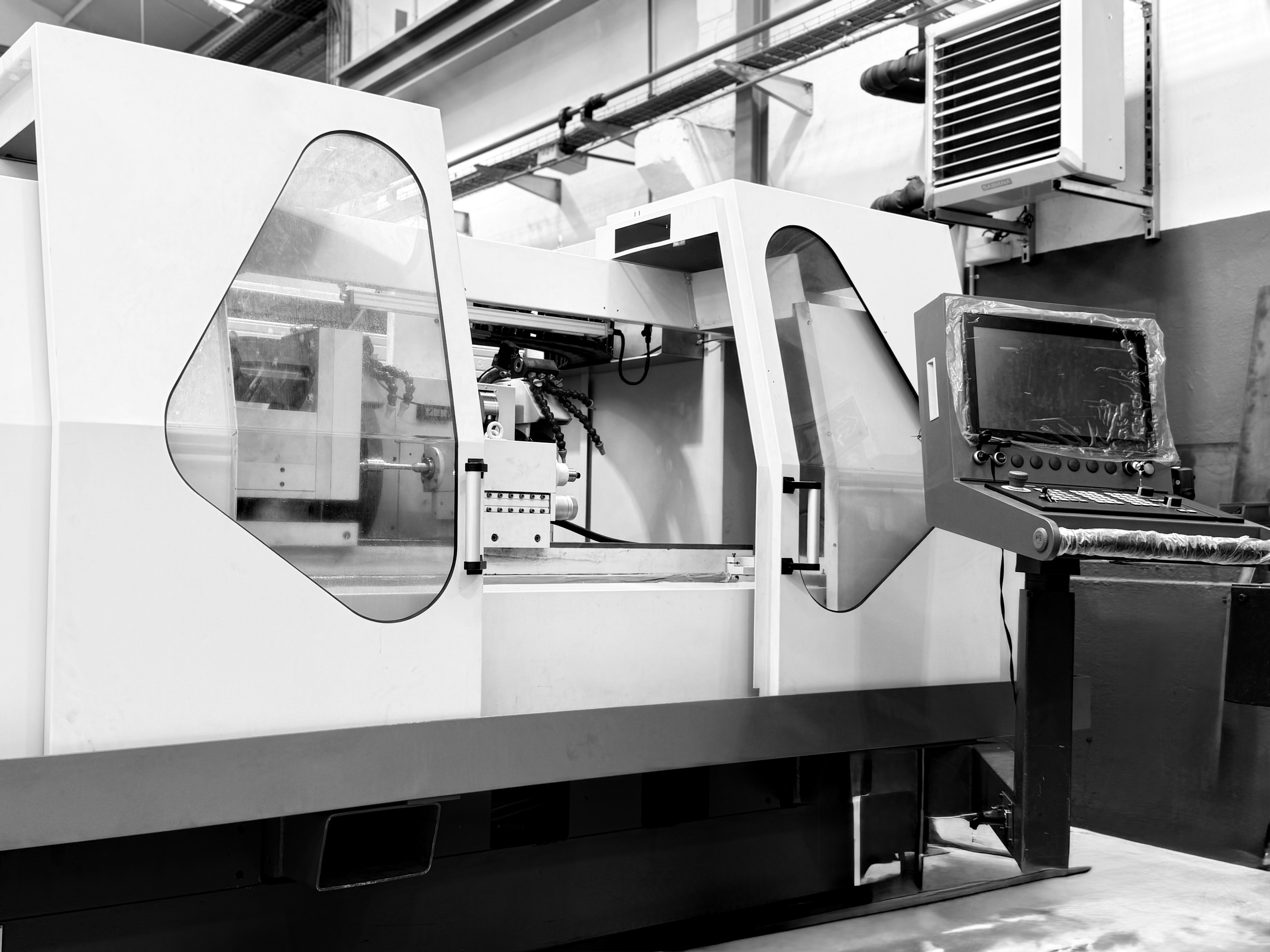
Replacement of old numerical controls (Fagor, Fanuc, Heidenhain) that have lost support. The drivers for the axes and the CNC are changed, allowing program uploads via network or USB and machining at higher speed and precision.
Upgrade of Hydraulic Presses and Packaging Lines
In presses, old proportional valves are replaced and closed-loop control is added to improve force accuracy. In packaging lines, axes are synchronized using servos ("electric axis"), eliminating chains and mechanical cams prone to wear.
Common Mistakes When Planning Machinery Upgrade
Underestimating Downtime: A well-executed retrofit takes time. Planning it for a weekend often leads to failure.
Ignoring Safety: Modernizing control without updating safety to current regulations is a serious negligence.
Lack of Documentation: Starting without clear schematics of the current machine forces improvisation, which drives up engineering costs.
Frequently Asked Questions (FAQ)
How long does a complete retrofit usually take?
It depends on the complexity, but the physical execution in the plant usually ranges from 1 to 3 weeks. The important thing is that the total delivery time is drastically lower than the 20-40 weeks that it may take for a new machine to be delivered.
Can an old machine's safety be certified after the retrofit?
Yes, and it should be. When making substantial changes to the control and safety systems, a new risk assessment must be performed, and a declaration of conformity or compliance with RD 1215/97 must be issued, ensuring that the equipment is safe for operators.
Conclusion
The industrial machinery retrofit is one of the most powerful tools for plant managers looking to balance budget and technology. It allows giving a second technological life to mechanically valuable assets, opening the door to digitalization without the barrier of acquiring new equipment.
If you have critical machines approaching the end of their electronic lifespan, don’t wait for catastrophic failure.