Energy efficiency in industrial motors: regulatory guide and savings
In the global industrial fabric, the electric motor is the workhorse. It is estimated that drive systems consume about 70% of electricity in the industry. Therefore, discussing energy efficiency in industrial motors is not just a matter of environmental compliance; it is a direct financial strategy to reduce operating costs (OPEX) and improve plant competitiveness.
What is energy efficiency in electric motors and why is it critical?
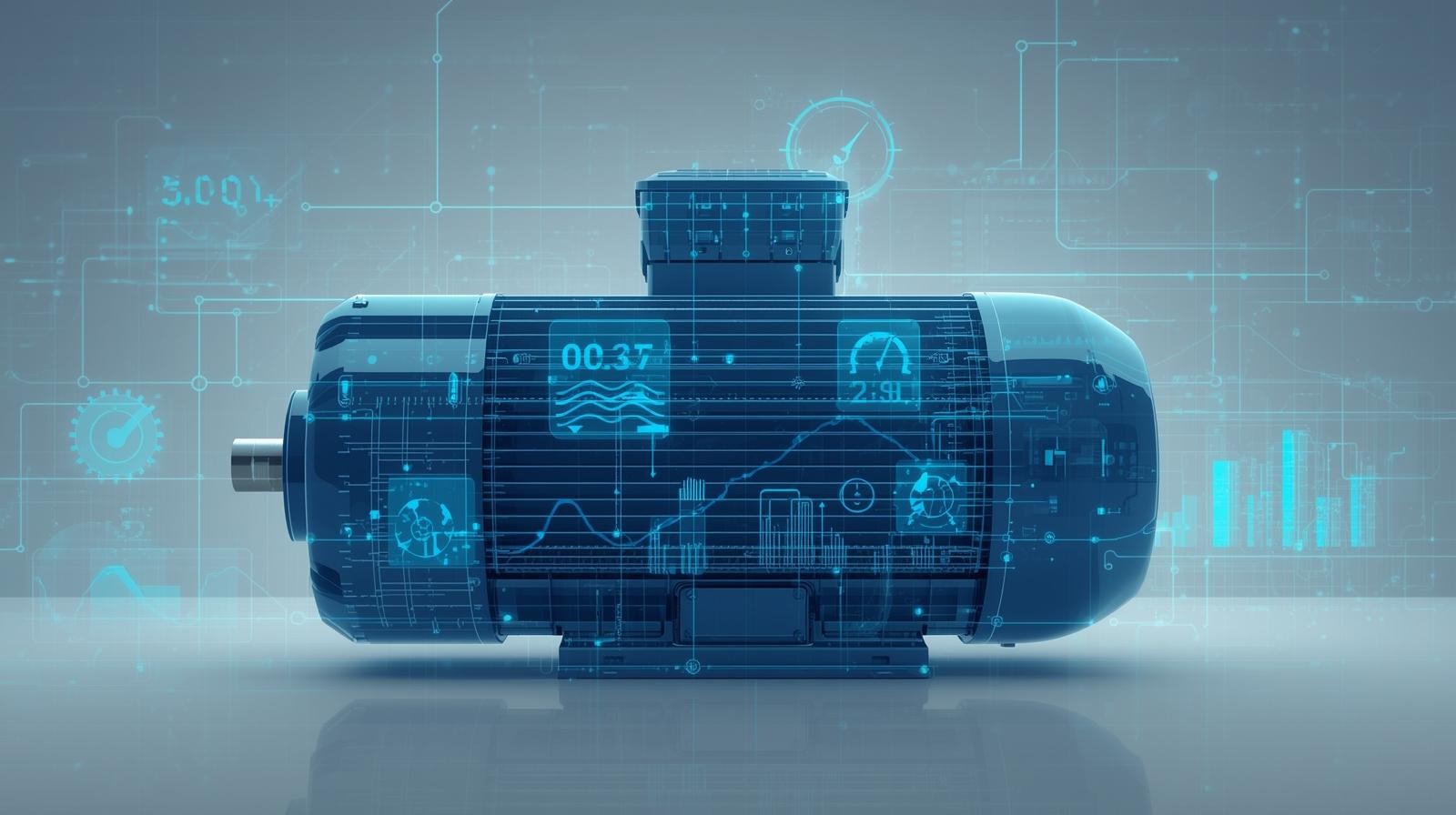
From a technical standpoint, the energy efficiency of a motor (η) is the ratio between the output mechanical power (what moves the shaft) and the input electrical power (what you pay to the power company).
No motor is 100% efficient. The difference between input and output is lost in the form of heat due to:
Joule losses in the stator and rotor (copper resistance).
Iron losses (magnetic core).
Mechanical friction and ventilation.
Optimizing this ratio is critical because the purchase price of a motor represents, on average, only 5% of its total life cycle cost (LCC). The remaining 95% is the electrical consumption. A few percentage points increase in efficiency can translate into thousands of euros in annual savings per unit.
Impact on industry operating costs (OPEX)
In a plant with hundreds of motors running 24/7 (pumps, fans, compressors), inefficiency is a "phantom cost". Replacing old motors (IE1 or IE2) with modern technologies directly reduces the electric bill, freeing cash flow for other investments.
Environmental benefits and carbon footprint
Reducing industrial kWh consumption has a direct correlation with decreasing CO₂ emissions. For companies with sustainability goals or ISO 50001 certifications, upgrading the motor fleet is one of the highest-impact actions in their energy audit.
Regulations and efficiency classes IEC 60034-30-1 (from IE1 to IE5)
The International Electrotechnical Commission (IEC) sets the global standard for classifying motor efficiency. The IEC 60034-30-1 standard defines the current classes, progressively tightening the requirements to force the market to evolve technologically.
Class IE | Name | Typical Technology | Market Status |
IE1 | Standard Efficiency | Basic induction (squirrel cage) | Obsolete (prohibited for sale in the EU except in certain cases). |
IE2 | High Efficiency | Improved induction (more copper/iron) | Minimum legal only if used with a variable drive (VSD). |
IE3 | Premium Efficiency | Optimized induction | Current mandatory standard for direct grid (DOL). |
IE4 | Super Premium | Advanced induction or Permanent Magnets (PM) | Recommended for new design and high ROI. |
IE5 | Ultra Premium | Synchronous reluctance motors (SynRM) or PM | The highest efficiency available today. |
Technical differences between IE3 (Premium) and IE4 (Super Premium)
The jump from IE3 to IE4 involves a loss reduction of approximately 15-20%. While IE3 is achieved by optimizing the traditional induction motor (more active material), IE4 Super Premium often requires hybrid technologies or extremely refined squirrel cage designs. The thermal difference is notable: an IE4 motor operates cooler, which extends the lifespan of bearings and insulation.
What is class IE5 (Ultra Premium) and when to use it?
Class IE5 is the current technological frontier. It is commonly achieved with synchronous reluctance motors (SynRM) assisted by magnets. These motors almost completely eliminate rotor losses (there are no induced currents). They are ideal for frequently partial load applications and heavy use, where energy savings pay back the initial extra cost in record time.
Legal deadlines and current obligations in the EU
The Ecodesign Regulation (EU) 2019/1781 marked a turning point.
Since July 2021, three-phase motors from 0.75 kW to 1,000 kW must be at least IE3 (or IE2 if used with a variable drive).
Since July 2023, motors from 75 kW to 200 kW must be IE4 for new sales.
5 technical strategies to optimize drivetrain efficiency
Efficiency depends not only on the motor (component), but on the entire drive system. Installing an IE5 motor in a poorly designed system is throwing money away.
Implementation of variable frequency drives (VFD)
The use of a variable speed drive (VSD) is the most powerful saving measure in variable torque applications (pumps and fans). According to affinity laws, reducing the speed of a pump to 80% reduces its energy consumption by 50%. The drive adjusts the energy delivered to the actual demand of the process, eliminating the waste from throttling valves.
The problem of motor oversizing
A classic engineering mistake is to "play it safe" by installing a larger motor than necessary. The efficiency curve of a motor drops sharply when it operates below 50% of its rated load. Additionally, the power factor collapses. Matching the motor power to the actual load is vital for efficiency.
Mechanical transmission management and alignment
Worn or poorly tensioned V-belts can create losses of 5-10%. Direct drives or synchronous belts are more efficient. Furthermore, poor alignment between the motor and load generates vibration and heat, which is nothing more than wasted energy and a risk of failure.
Maintenance and power quality (harmonics)
Dust on cooling fins increases internal temperature (ohmic resistance) and Joule losses. On the other hand, an electrical network with high harmonics causes parasitic heating in the motor. Installing harmonic filters protects the efficiency and lifespan of the equipment.
Rewinding vs. replacement: which is more efficient?
When a motor burns out, the doubt arises. Technically, the rewinding process (especially the burning of the old varnish) usually damages the stator laminations, reducing the original efficiency by 1% to 2%.
General rule: for small motors (<30 kW) or old ones (IE1/IE2), replacing with a new IE3/IE4 is almost always more cost-effective in the medium term than repairing.
Profitability analysis: how to calculate the ROI of an efficient motor
To justify the investment to management, we must calculate the Return on Investment (ROI). Let’s look at a simplified but realistic example.
Scenario: replacement of a 30 kW motor in a water pump.
Operation: 4,000 hours/year.
Energy cost: 0.15 €/kWh.
Old motor (IE2): efficiency approx. 91.0%.
New motor (IE4): efficiency approx. 94.0%.
Calculation of savings:
Consumption IE2: (30 / 0.91) x 4,000 = 131,868 kWh/year.
Consumption IE4: (30 / 0.94) x 4,000 = 127,659 kWh/year.
Energy savings: 4,209 kWh/year.
Economic savings: 4,209 x 0.15 € = 631 €/year.
If the additional cost of buying an IE4 motor compared to a standard one or repairing the old one is 800 €, the payback period is approximately 15 months. From then on, everything is net profit during the 15-20 years of the motor's useful life.
Common mistakes that reduce motor efficiency
Avoid these "sins" in the plant that sabotage your equipment’s performance:
Poor ventilation: motors covered in dust or boxed in without airflow. Heat increases electrical resistance.
Voltage imbalance: a 3% voltage difference between phases can increase motor temperature by 25%.
Poor lubrication: increases mechanical friction and no-load consumption.
Ignoring the nameplate: incorrectly connecting a 400V motor in star/delta.
Frequently Asked Questions (FAQ)
How much money does an IE4 motor really save compared to an IE2?
It depends on the power and hours of use, but generally, the savings range from 3% to 8% of the total consumption. In motors running 24/7, the investment is often recovered in less than two years.
How does the power factor affect efficiency?
Technically, the power factor (cos φ) does not change the mechanical efficiency of the motor (energy conversion), but a low factor forces the grid to transport more reactive current. This results in losses in the upstream cables and transformers and often leads to economic penalties on the electric bill.
Conclusion
Energy efficiency in industrial motors has ceased to be an option and has become a regulatory and competitive standard. Shifting from a "purchase cost" mentality to a "motor life cycle" mindset is key to unlocking massive savings.
Whether through upgrading to IE4/IE5 motors, installing variable frequency drives, or improving mechanical maintenance, the savings opportunities are happening right now in your plant.
Not sure where to start? The first step is to conduct an industrial energy audit of your motor fleet to identify critical equipment where the return on investment is immediate.